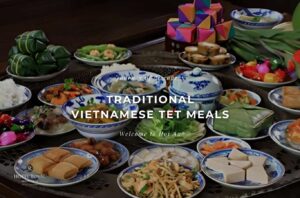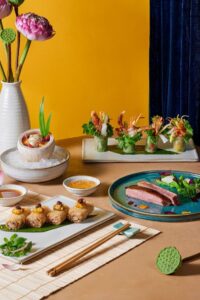

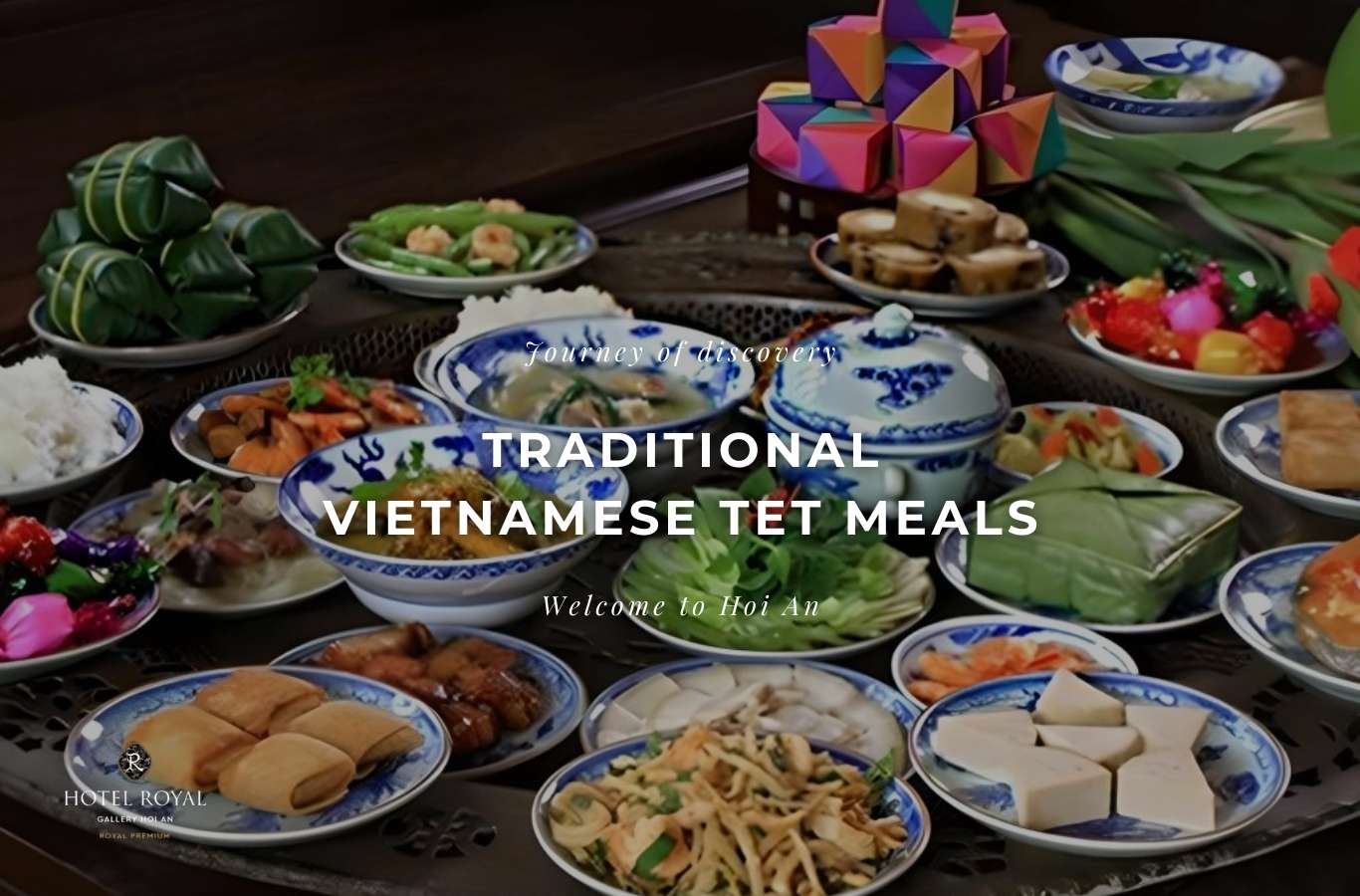
Traditional Vietnamese Tet meals of the three regions reflect the natural conditions, tastes, and cultural identities of each area. From the careful and elaborate style of the North, the harmonious and restrained character of the Central region, to the rich and open spirit of the South, each Tet meal features its own dishes and meanings, contributing to the expression of traditional culinary identity during the Lunar New Year. Join Hotel Royal Hoi An Gallery in exploring more than 20 Tet dishes through the article below.
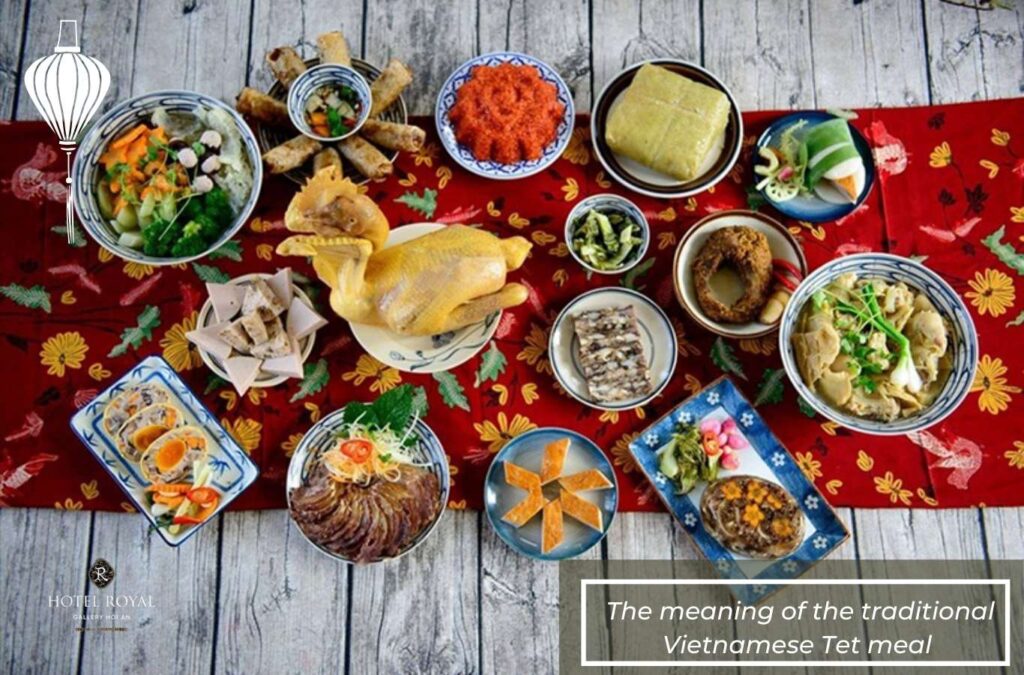
The meaning of the traditional Vietnamese Tet meal
In Vietnamese Tet culture, the traditional Tet meal always holds a special place, closely associated with spiritual values and meanings passed down through many generations.
- A symbol of family reunion: This is a time when the whole family sets aside work, gathers around one table, shares the first meal of the year, and talks about the past year, creating a sense of bonding that is hard to find on ordinary days.
- Expressing the principle of “remembering one’s roots”: The Tet meal is carefully prepared and offered to ancestors, expressing gratitude to grandparents and deceased parents, and wishing for their protection and blessings for the family in the new year.
- Sending wishes for a good new year: Each dish in the Tet meal is associated with folk beliefs about abundance, smooth progress, and peace, reflecting the hope for a favorable year in life and work.
- Preserving and passing down traditional cultural values: The process of preparing the Tet meal helps younger generations better understand customs and Tet practices of their family and regions, thereby continuing traditional ways of life across generations.
Northern Vietnamese Tet meal
The Northern Vietnamese Tet meal carries a distinct character through its careful preparation, balance, and refined presentation, reflecting a reserved lifestyle and long-standing traditions that shape the region’s unique culinary identity.
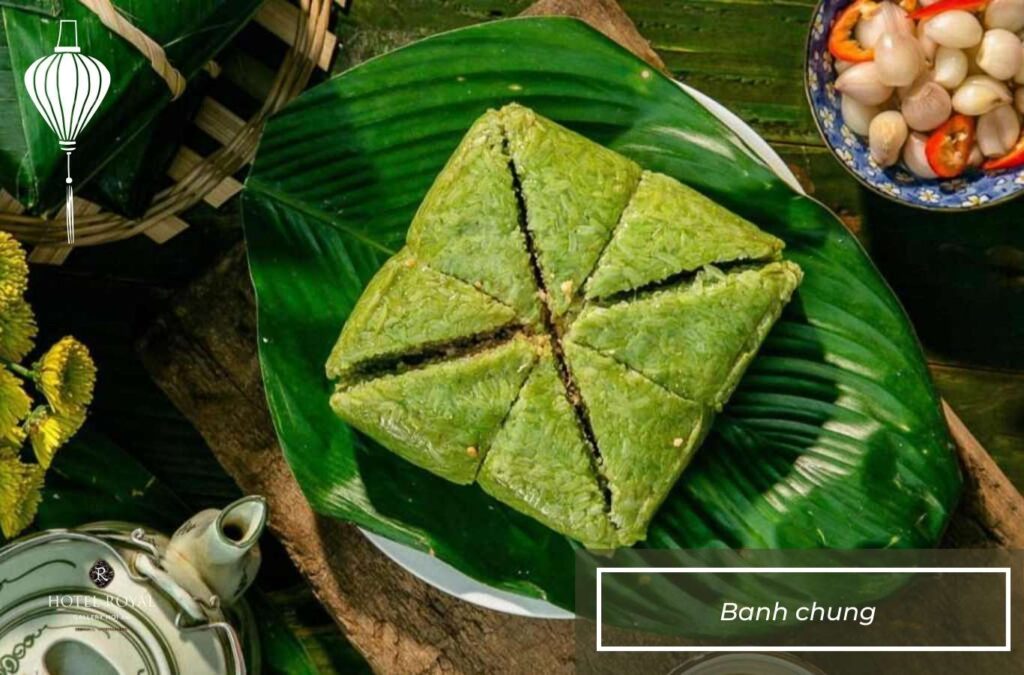
Banh chung
In the Northern Vietnamese Tet meal, banh chung always holds a central position, closely associated with family reunions around the pot of cakes on the final nights of the year. The cake is made from glutinous rice, mung beans, and pork belly, wrapped neatly in dong leaves, tied with bamboo strings, and boiled continuously for 8–12 hours. The process of wrapping and cooking banh chung is not only about preparing food for Tet, but also a time for family members to gather, preserving the slow rhythm of Tet and traditional family values.
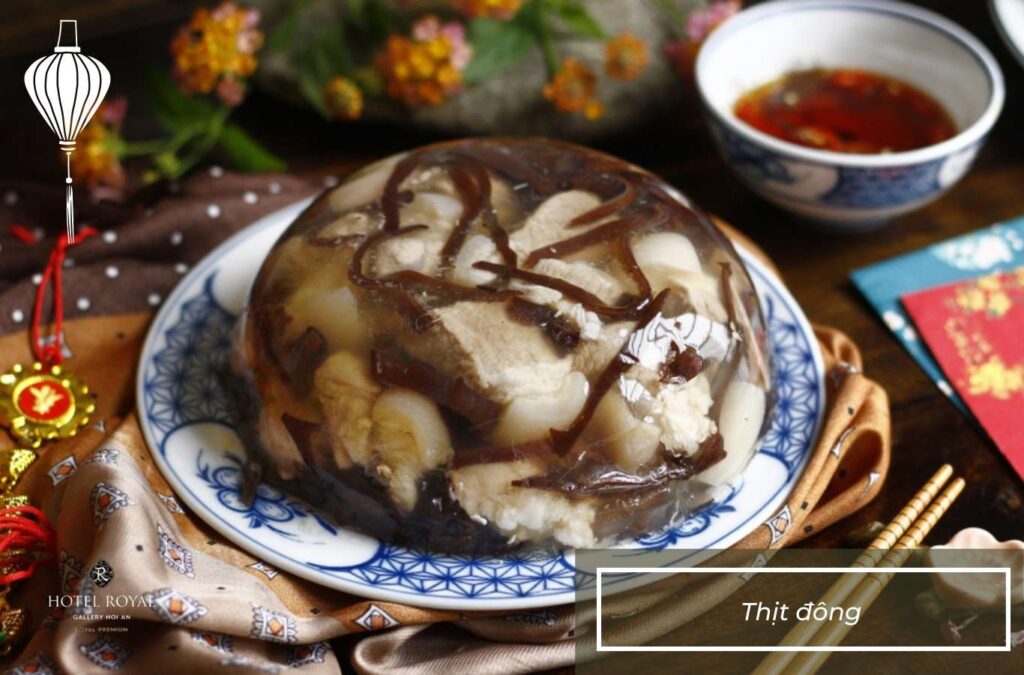
Thit dong
Thit dong is a dish with a very distinctive mark of Northern Tet, appearing only when the weather is cold enough. It is usually made from pork hock or shoulder, simmered with pork skin and wood ear mushrooms until the meat becomes tender and the broth clear. When cooled naturally, the dish solidifies into a translucent block. Thit dong has a light fatty taste and a cooling sensation, often eaten with pickled onions to balance the richness of protein-heavy Tet dishes.
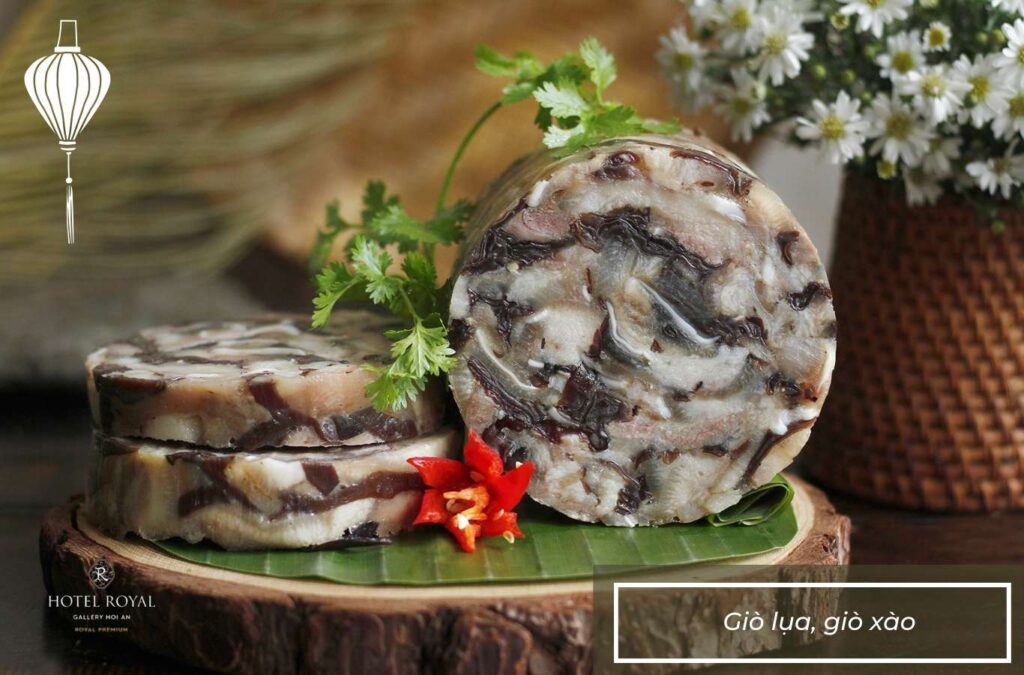
Gio lua, gio xao
During Northern Tet, gio lua and gio xao are familiar dishes closely associated with the atmosphere of early-year family gatherings. Gio lua is smooth and soft, with a gentle flavor from finely pounded lean pork, making it easy to eat. Gio xao offers a crunchy texture from pig ears, snouts, and mushrooms, combined with black pepper for a richer taste. Both dishes are convenient, easy to store, and clearly reflect the essence of traditional Northern Vietnamese cuisine in the Tet meal.
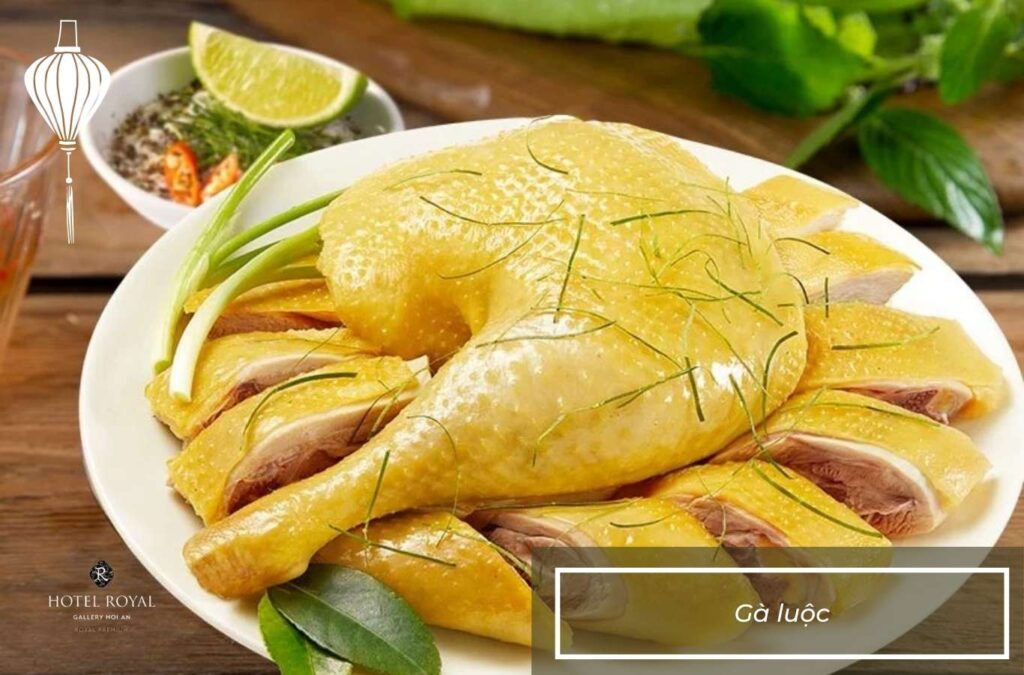
Boiled chicken
For Northern Vietnamese people, boiled chicken is not merely a dish but an important offering in ancestor worship rituals, representing careful preparation and sincerity during the early days of the new year. Families often choose a healthy free-range rooster with a bright red comb to show respect when offering it to ancestors. The chicken is cleaned, shaped neatly, and boiled just until cooked so that the skin turns naturally yellow while the meat remains firm and sweet.
After the offering ritual, the chicken is chopped and served with salt, pepper, and lime or shredded kaffir lime leaves. Although simply seasoned, boiled chicken preserves its natural flavor, reflecting the Northern culinary philosophy of simplicity and refinement during Tet.
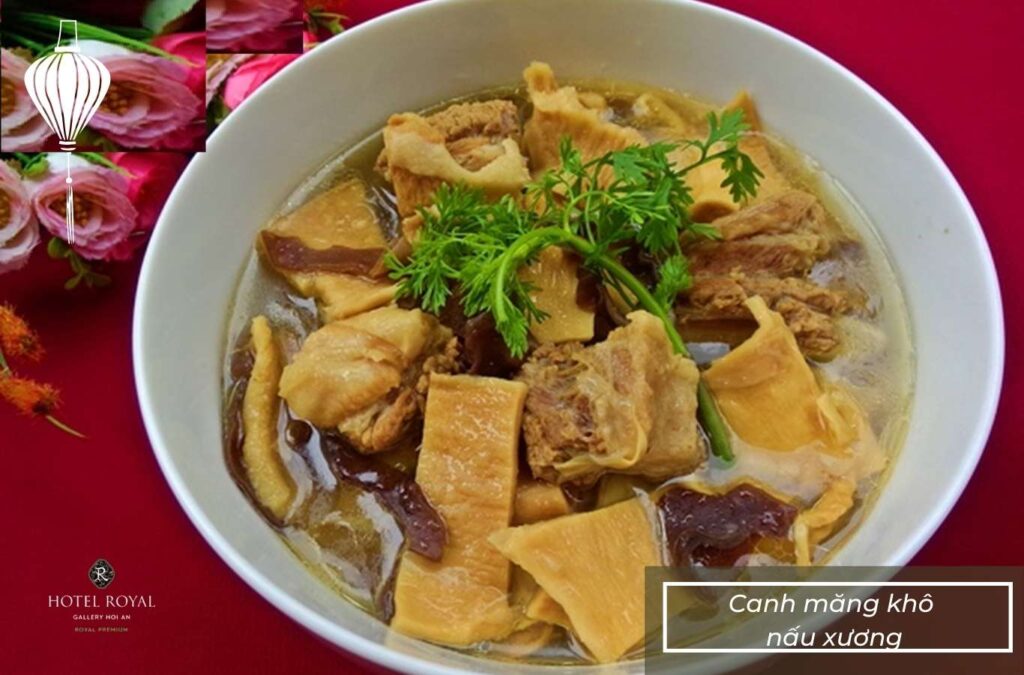
Dried bamboo shoot soup with pork bones
Amid the chilly weather and abundance of meat dishes during Tet, dried bamboo shoot soup with pork bones is highly anticipated for its light and comforting taste. Dried bamboo shoots are prepared before Tet by soaking and boiling them several times to soften and remove bitterness. They are then lightly stir-fried and simmered with pork bones or pork hocks for an extended time to create a naturally sweet broth. The soup has a rich flavor with tender yet chewy bamboo shoots, making it ideal for balancing cold cuts and rich dishes during Tet.
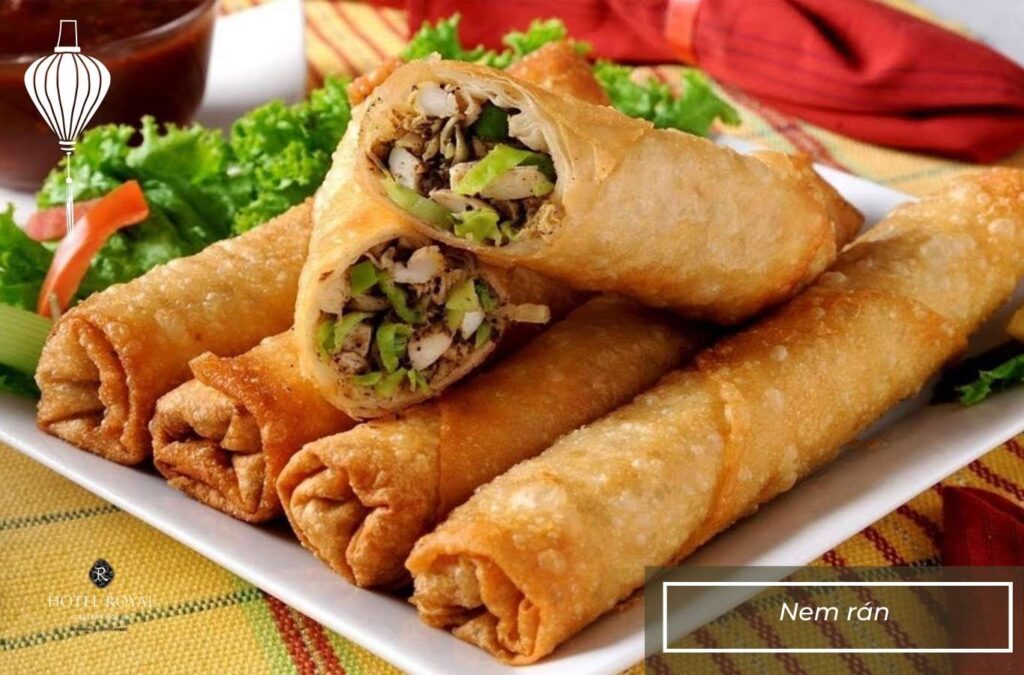
Nem ran
Nem ran is a familiar dish in traditional feasts and Northern Tet meals. The filling usually includes minced pork, glass noodles, wood ear mushrooms, shiitake mushrooms, eggs, and vegetables, wrapped in rice paper and deep-fried until golden and crispy. As they fry, the aroma spreads throughout the kitchen, creating a very distinctive Tet atmosphere.
Nem ran is best enjoyed hot, dipped in sweet and sour fish sauce, and served with fresh herbs. Loved by many generations, this dish adds variety and appeal to the Northern Tet meal.
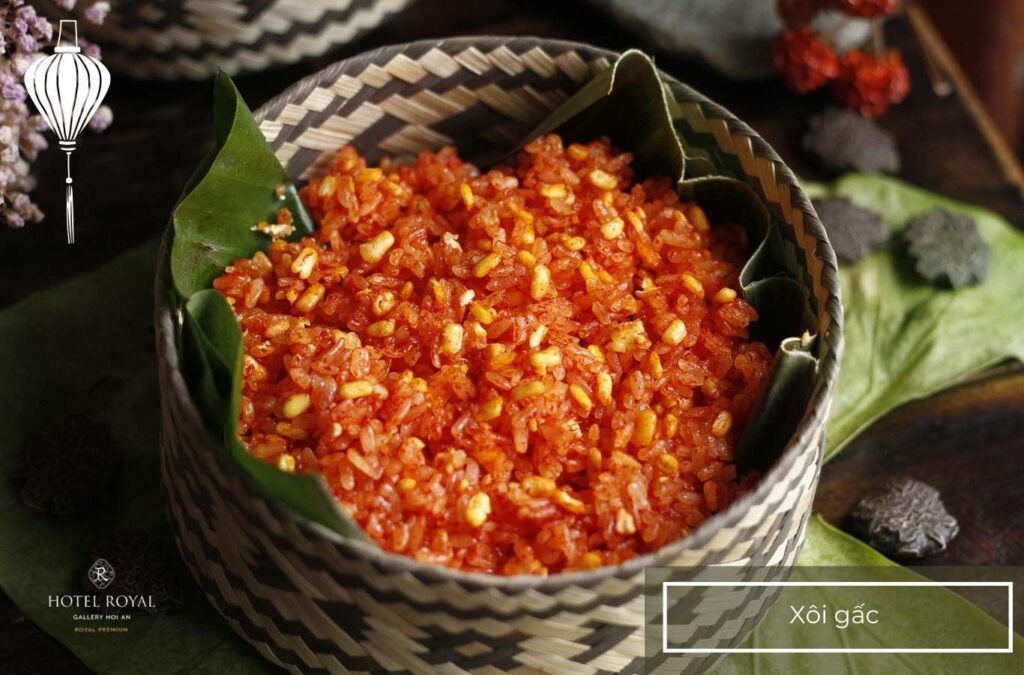
Xoi gac
Xoi gac is a common dish in Tet meals and offering trays thanks to its vibrant red-orange color, symbolizing luck and prosperity. Glutinous rice is mixed with ripe gac fruit and a little rice wine to preserve the color, then steamed until fragrant and sticky. Some families add mung beans or shredded coconut for extra richness.
Central Vietnamese Tet meal
The Central Vietnamese Tet meal clearly reflects the region’s harsh natural conditions and the thrifty, careful lifestyle of its people. Dishes are often strongly flavored, salty, and easy to preserve, allowing them to be enjoyed over several days during Tet.
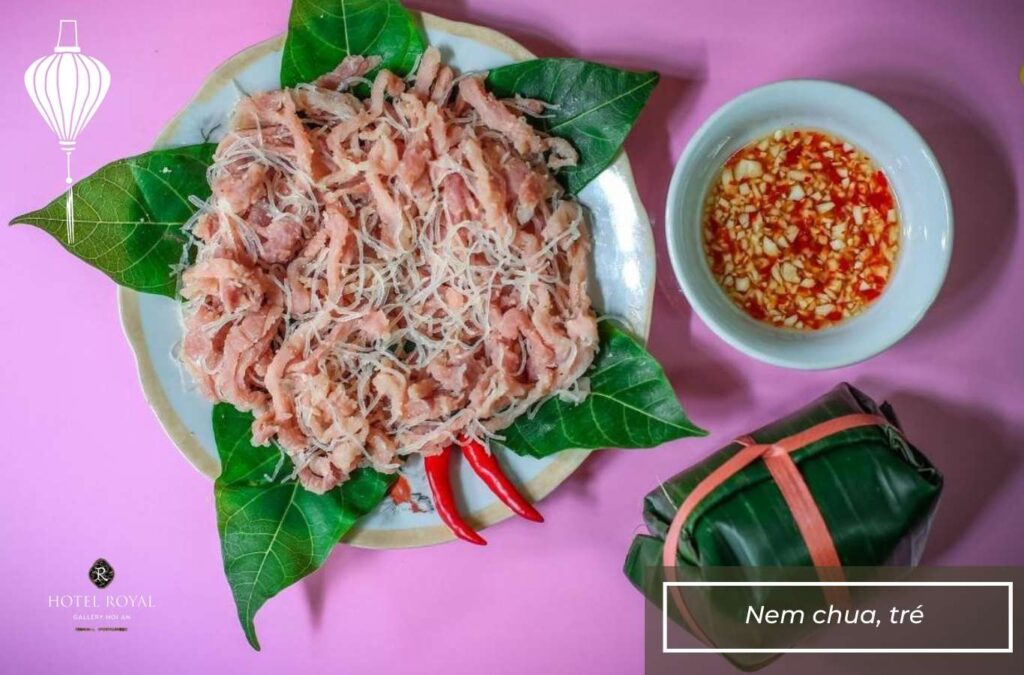
Nem chua, tre
Nem chua and tre are distinctive dishes that clearly express the sour, salty, and spicy palate of Central Vietnam during Tet. Nem chua is made from minced pork mixed with pork skin and seasonings, then tightly wrapped and naturally fermented, creating a mild sour taste and a chewy texture. Tre is prepared from shredded pig ears and snouts mixed with roasted rice powder, galangal, garlic, and spices, then wrapped in banana leaves or straw. These two dishes are often eaten with banh tet, helping balance richness and enhance overall flavor in the Tet meal.
Pork soaked in fish sauce
When a savory dish that can last for many days is needed, Central Vietnamese families often choose pork soaked in fish sauce for the Tet meal. The pork is boiled, cooled, then submerged in fish sauce that has been boiled and cooled, allowing it to absorb flavor and be preserved longer. The dish has a strong salty taste and firm texture, usually sliced thin and eaten with banh tet or fresh herbs.
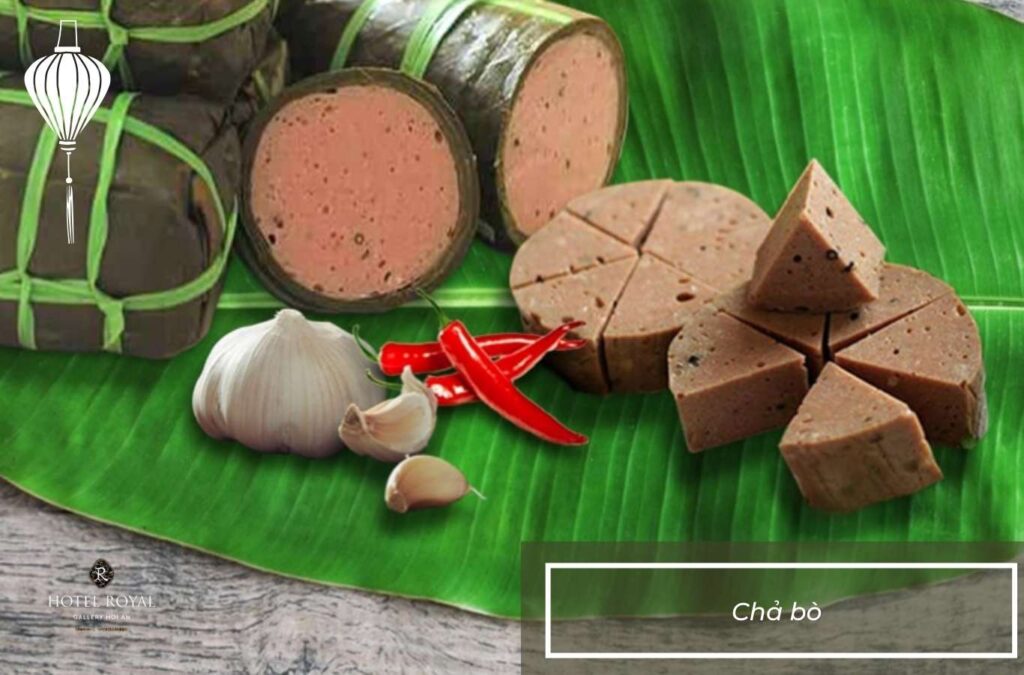
Cha bo
Cha bo appears in the Central Vietnamese Tet meal as a convenient cold cut that is full of flavor. It is made from finely ground beef thoroughly mixed with seasonings and black pepper, wrapped in banana leaves, and steamed until cooked. When eaten, cha bo has a distinctly chewy texture, a fragrant aroma, and a mild spiciness, well suited to the bold eating habits of Central Vietnam during Tet.
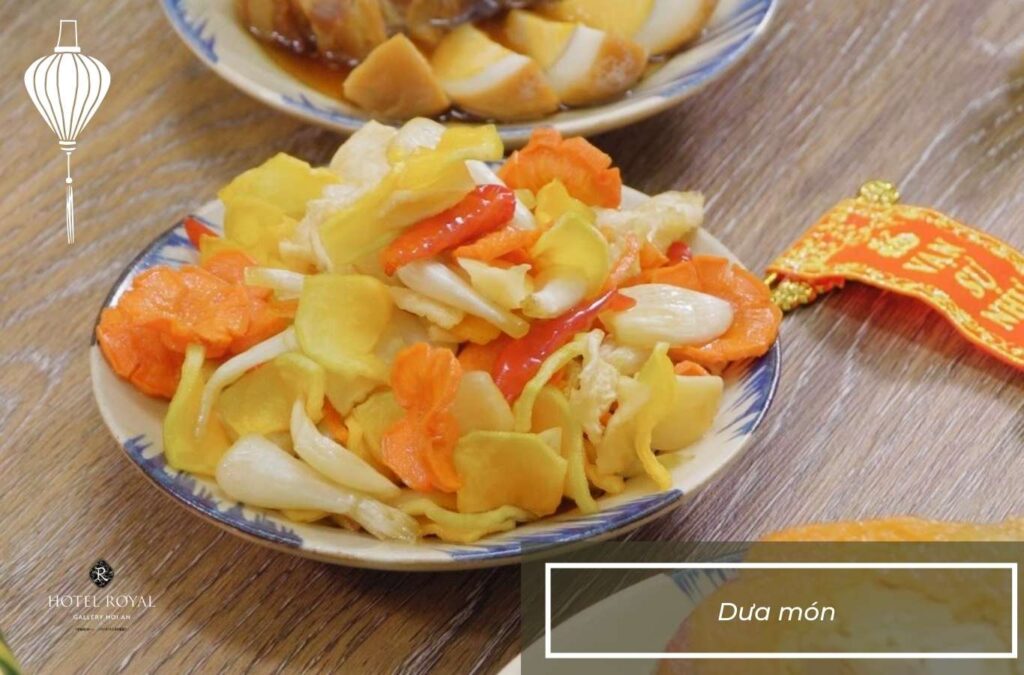
Dua mon
In the Central Vietnamese Tet meal, dua mon is almost always present to balance the palate after rich, savory dishes. Vegetables such as papaya, carrots, and white radish are peeled, cut into bite-sized pieces, and sun-dried until slightly wilted before pickling. They are then soaked in fish sauce cooked with sugar, garlic, and chili. Thanks to this drying and pickling process, dua mon has a clearly crunchy texture, a harmonious salty-sweet flavor, and can be enjoyed throughout the Tet holiday.
Tom rim, ca rim
When a savory dish that is “rice-consuming” and long-lasting is needed, Central Vietnamese households often choose tom rim or ca rim for the Tet meal. Shrimp or fish are cleaned, marinated with fish sauce, sugar, pepper, chili, garlic, and shallots, then simmered over low heat until the sauce thickens and coats each piece evenly. These dishes have a rich salty-sweet flavor with a slight spiciness, making them perfect with white rice or banh tet during the early days of the year.
Canh bun / canh mang
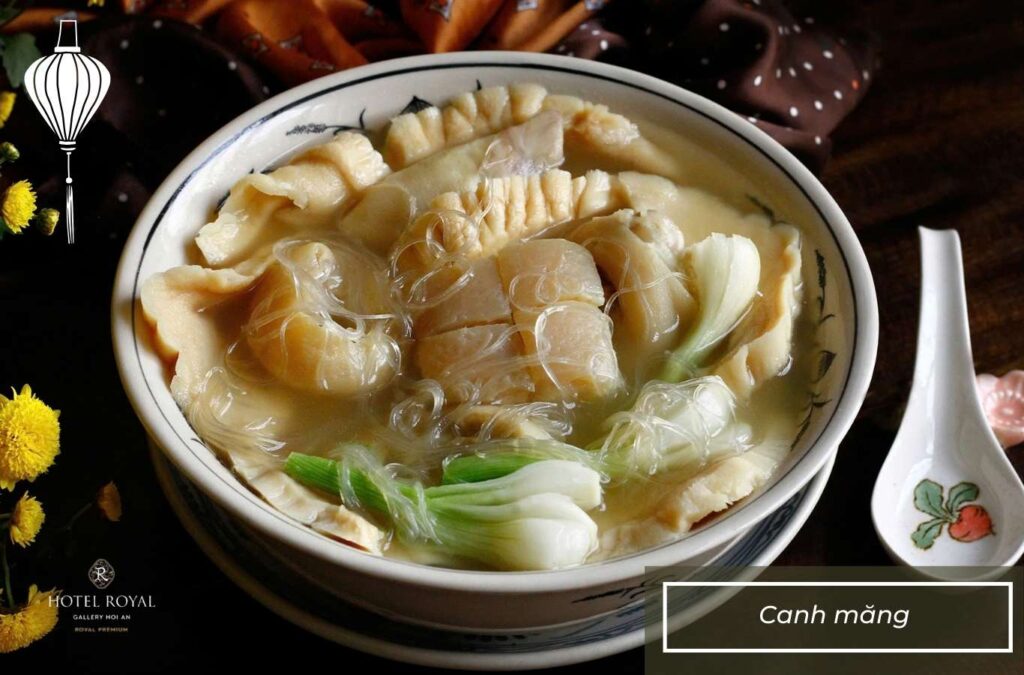
Amid many dry and salty Tet dishes, a bowl of hot soup helps make the Central Vietnamese meal more comforting. Canh bun is usually cooked with thick rice noodles combined with pork, crab, or shrimp, and green vegetables to create a light sweetness. Canh mang is made from dried or fresh bamboo shoots that have been carefully prepared, then simmered with bones or pork hock for a rich broth. These soups are typically cooked fresh each day, helping reduce heaviness and making the meal easier to enjoy.
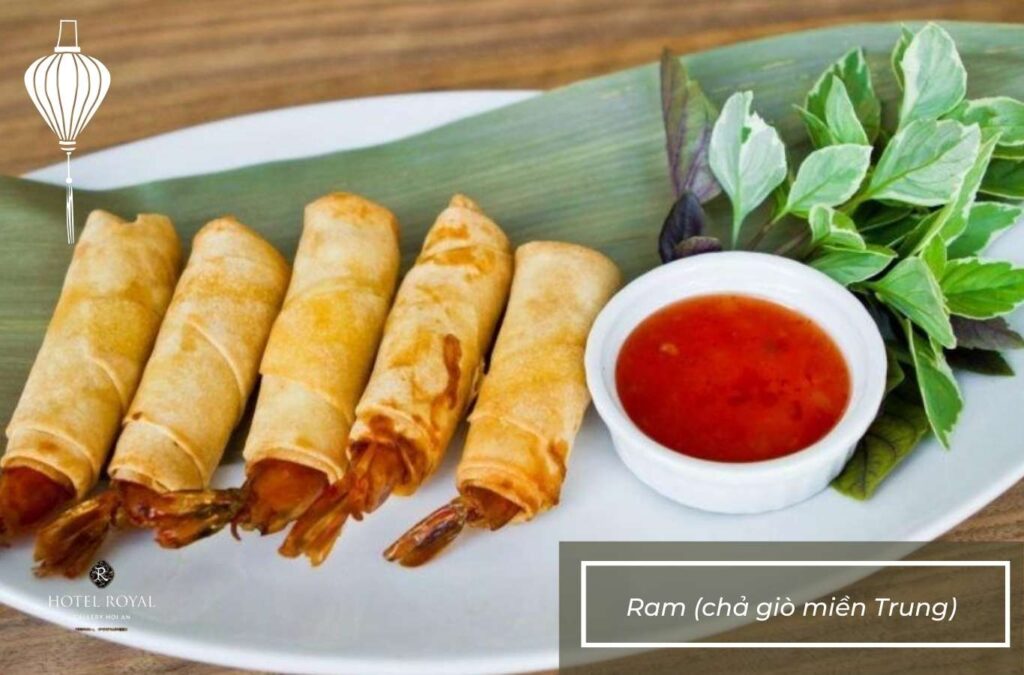
Ram (Central Vietnamese spring rolls)
During Tet, ram is a familiar fried dish that keeps Central Vietnamese kitchens lively. The filling usually includes minced pork, shrimp, onions, and pepper, wrapped in thin rice paper and deep-fried until golden and crispy. Compared to Northern nem ran, ram is smaller in size, with thinner wrappers and more strongly seasoned filling, creating a distinctly crunchy bite. This dish is typically eaten hot, dipped in sweet and sour fish sauce, or served with fresh herbs as part of the Tet meal.
Southern Vietnamese Tet meal
The Southern Vietnamese Tet meal carries a relaxed, open, and abundance-oriented spirit. Dishes often have a rich, mildly sweet flavor, are easy to enjoy, and suit long family gatherings during the Tet holiday.
Banh tet
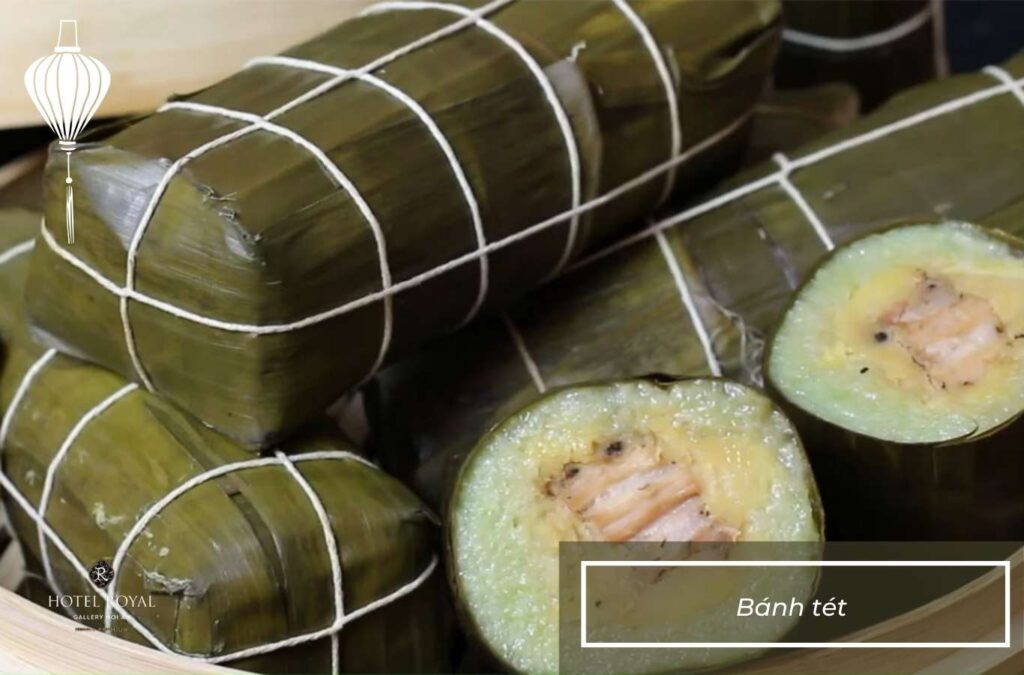
In Southern Vietnam, banh tet is the cake most closely associated with the Tet atmosphere, appearing on offering trays and family meals alike. It is made from glutinous rice, mung beans, and pork, wrapped in banana leaves into a long cylindrical shape and boiled for many hours. Southern banh tet typically has soft, sticky rice with a clearly rich taste, and sometimes includes banana or black bean fillings. When eaten, it is sliced into rounds, fried, or served with pickled vegetables, making it easy to enjoy during Tet days.
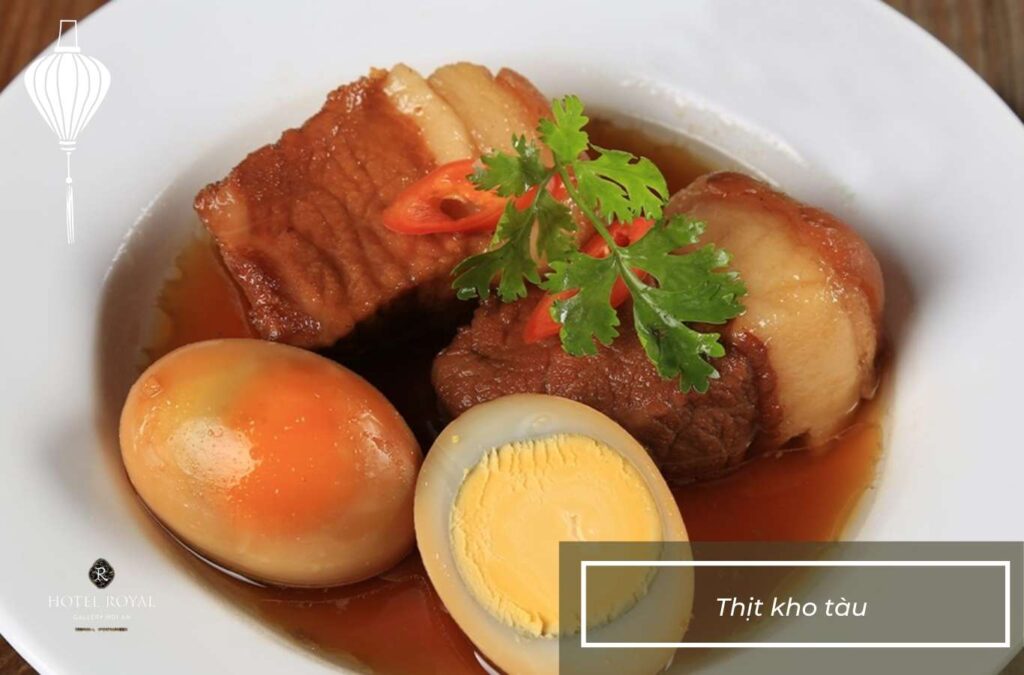
Thit kho tau
When mentioning the Southern Vietnamese Tet meal, thit kho tau is almost indispensable. Pork belly is cut into large pieces, marinated with fish sauce and sugar, then slowly braised with duck eggs and fresh coconut water. The dish has a caramel-brown color, a balanced salty-sweet flavor, and tender, rich meat without being overwhelming. The pot is often prepared before Tet and enjoyed gradually, symbolizing abundance and warmth throughout the new year.
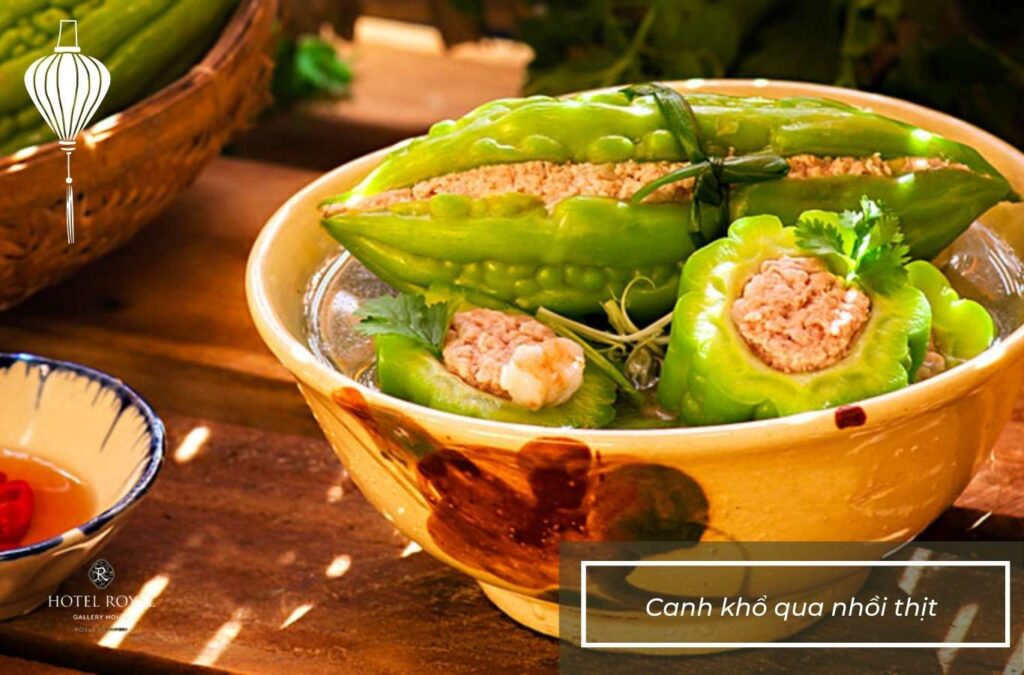
Canh kho qua nhoi thit
Canh kho qua nhoi thit carries strong symbolic meaning in the Southern Tet meal. Bitter melon is stuffed with minced meat mixed with wood ear mushrooms or glass noodles, then simmered in a light, clear broth. According to folk beliefs, eating this soup at the beginning of the year symbolizes that hardships of the old year will pass, welcoming a smoother and more fortunate new year.
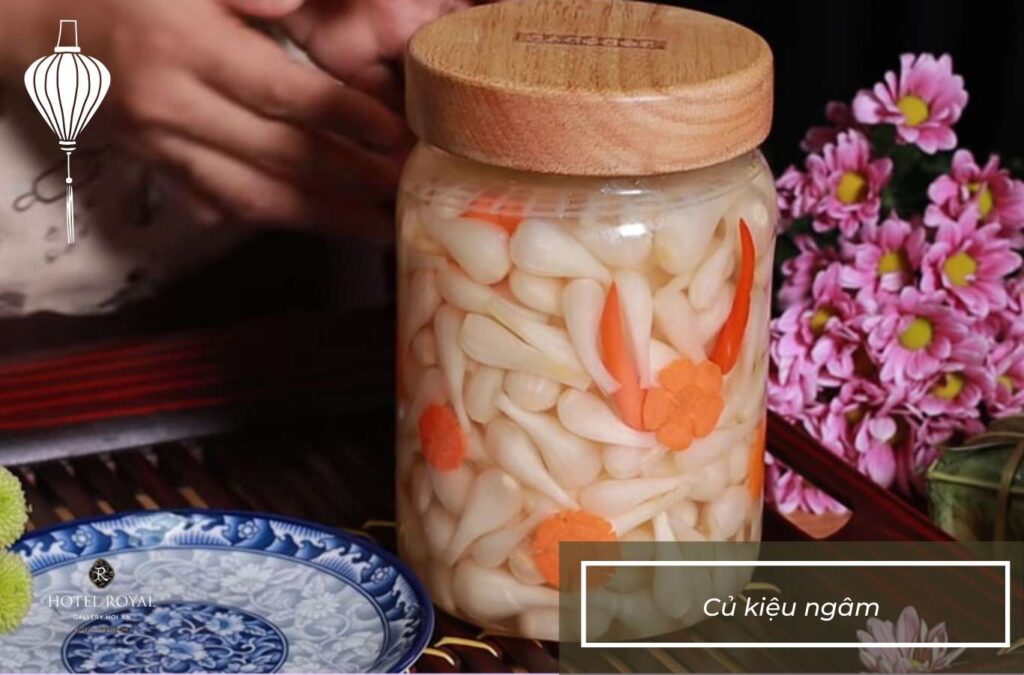
Cu kieu ngam
In the Southern Vietnamese Tet meal, cu kieu ngam plays the role of a side dish that balances the richness of main dishes. The scallions are cleaned, sun-wilted, then pickled in a vinegar-sugar solution to lightly ferment. When eaten, cu kieu has a sweet-and-sour taste, crisp texture, and fragrant aroma, commonly served with thit kho tau, banh tet, or dried shrimp. This dish is nearly indispensable during Southern Tet.
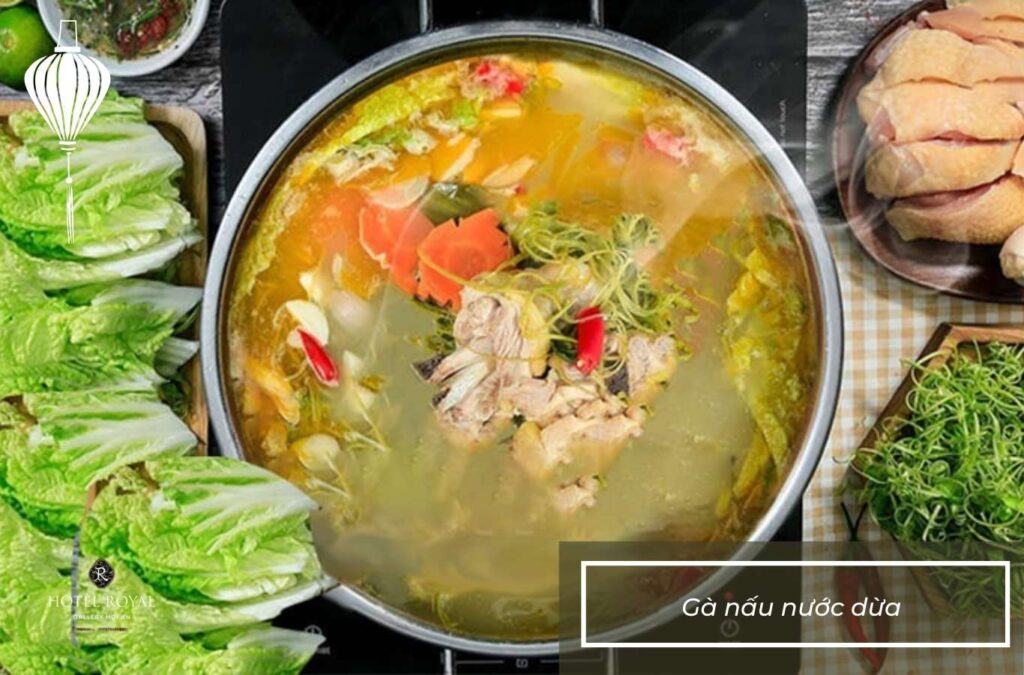
Ga nau lagu / ga nau nuoc dua
Ga nau lagu or ga nau nuoc dua often appears in the Southern Tet meal as a rich yet easy-to-eat stew. Chicken pieces are stir-fried briefly, then cooked with potatoes, carrots, or fresh coconut water to create natural sweetness. This dish is commonly eaten with bread or rice, providing warmth and comfort for large family meals during Tet.
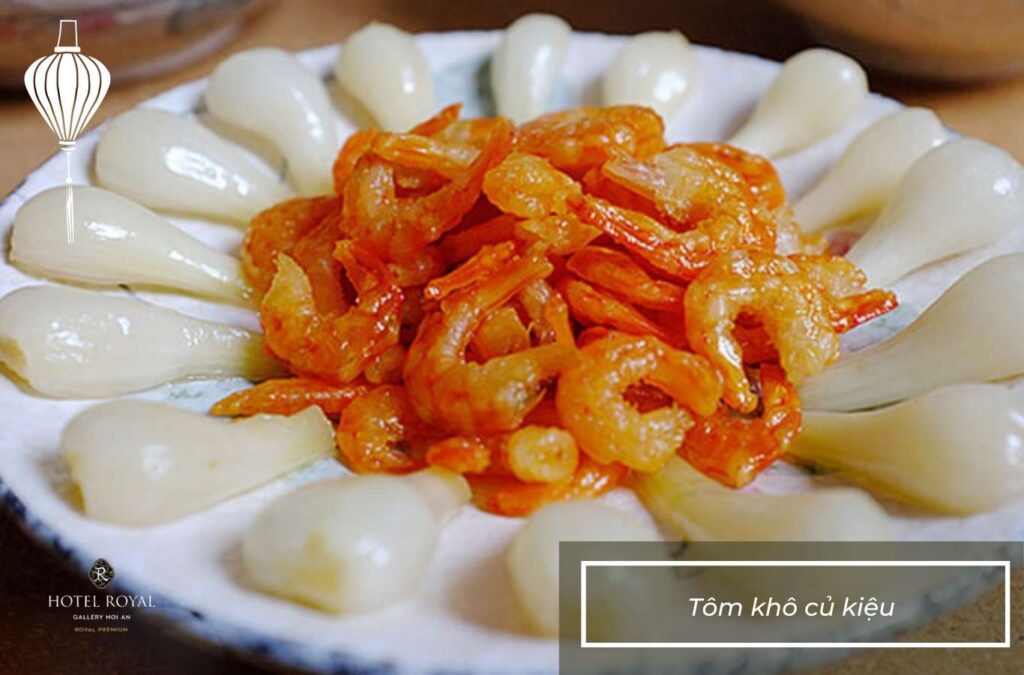
Tom kho cu kieu
Tom kho cu kieu is a familiar side dish closely associated with Southern Tet flavors. Dried shrimp are lightly simmered to enhance aroma and eaten with sweet-and-sour pickled scallions, creating a balance of salty, sweet, and sour tastes. This dish often appears in early-year meals or when entertaining guests, simple yet distinctly Southern Tet in character.
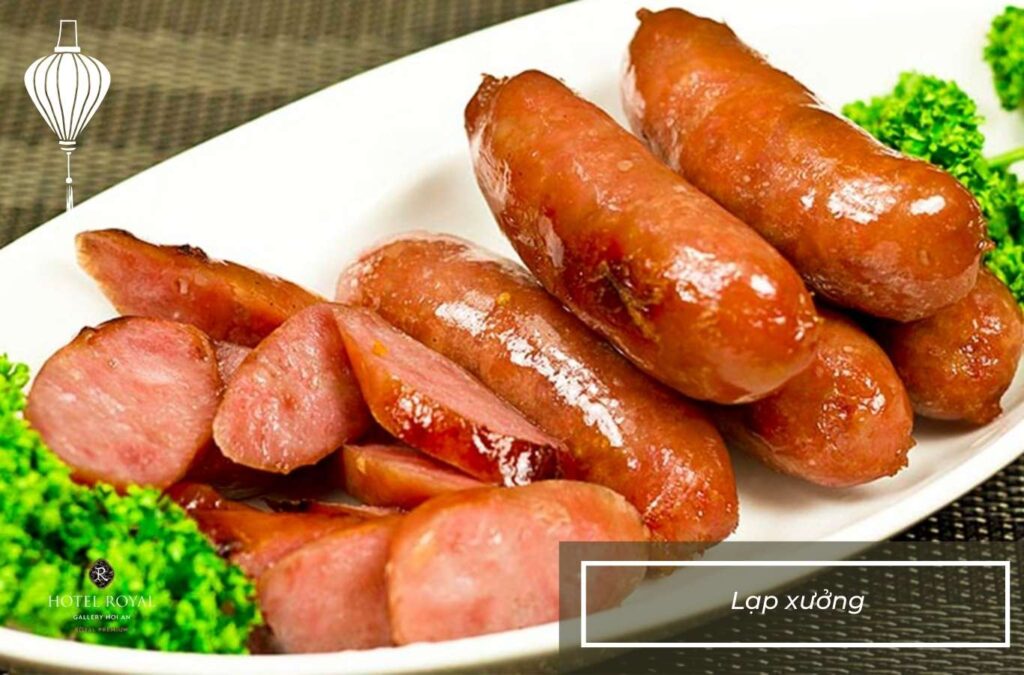
Lap xuong
Lap xuong is a dried sausage commonly prepared in advance by Southern families before Tet. It has a signature sweet flavor and is usually steamed or fried before serving. When sliced, lap xuong shows a deep reddish color, a clear aroma, and mild richness, pairing well with banh tet, white rice, or enjoyed as a snack during Tet days.
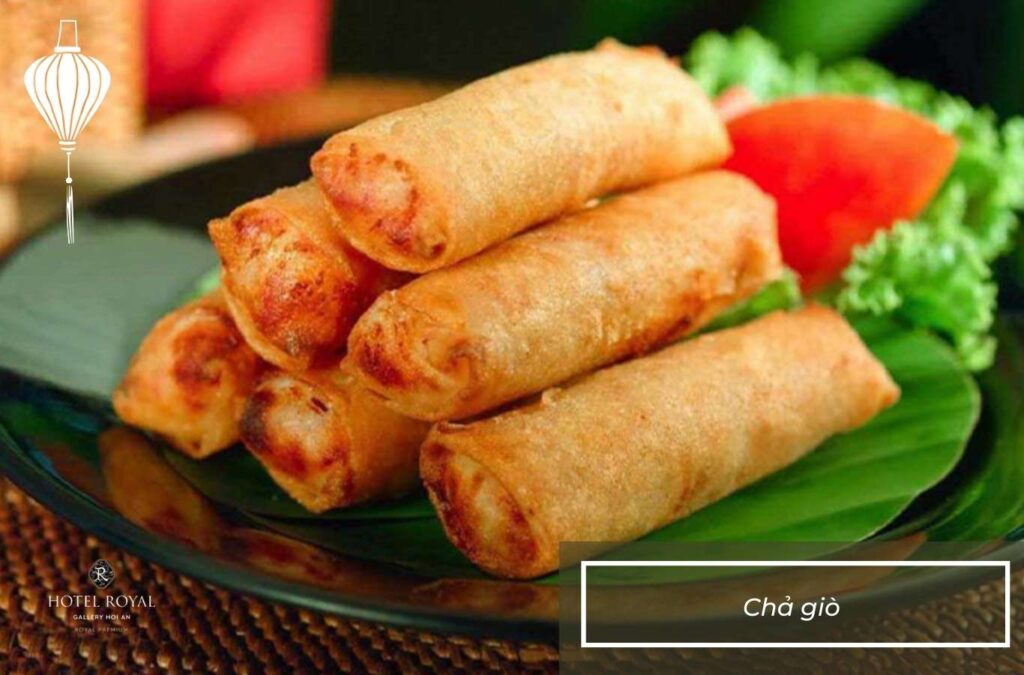
Cha gio
Cha gio is a familiar dish in the Southern Vietnamese Tet meal, made from minced meat, shrimp, glass noodles, and vegetables wrapped in rice paper and deep-fried until golden and crispy. The dish features a crunchy exterior and flavorful filling, usually served with fresh herbs and sweet-and-sour dipping sauce, adding richness and warmth to the Tet meal.
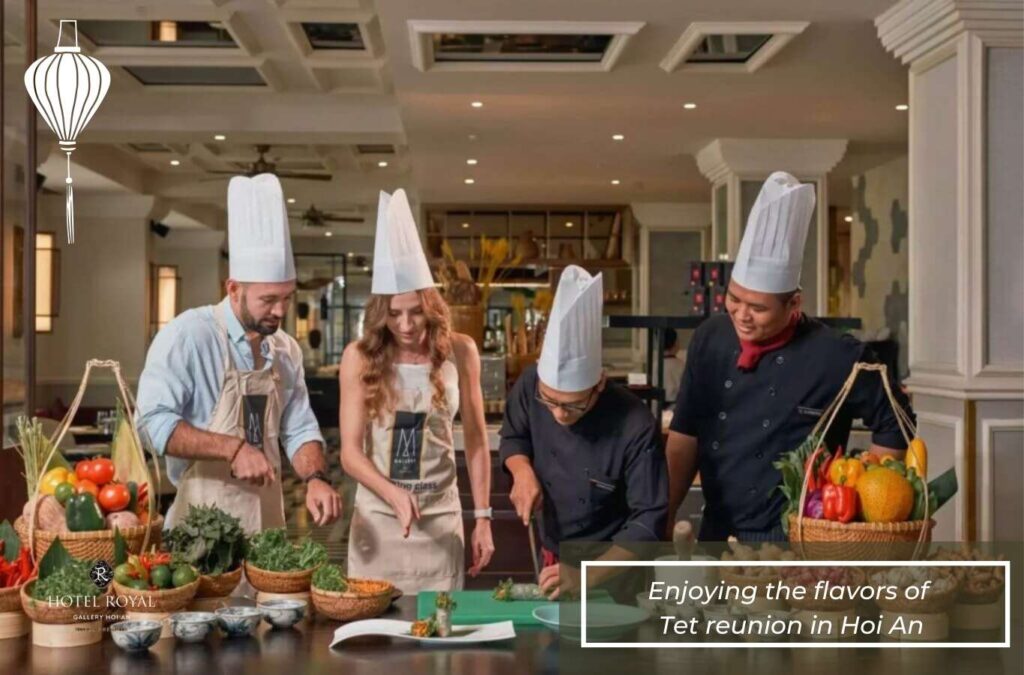
Enjoying the flavors of Tet reunion in Hoi An with Hotel Royal Hoi An Gallery
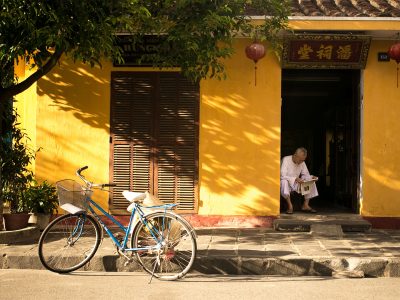
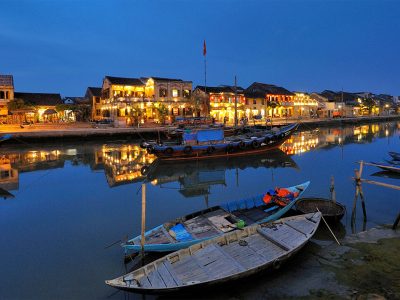
Celebrating Tet in Hoi An is a journey of embracing the slow rhythm of the old town, where traditional springtime atmosphere blends with the warmth of family reunions. This is a time for families and friends to gather, enjoy Tet cuisine, take part in cultural activities, and experience a sense of peace during the first days of the new year.
At Hotel Royal Hoi An Gallery, the Tet experience is fully recreated through a traditional Tet meal imbued with the spirit of togetherness, set within an elegant and tranquil resort environment. Guests can reconnect with family emotions through a series of thoughtfully curated experiences:
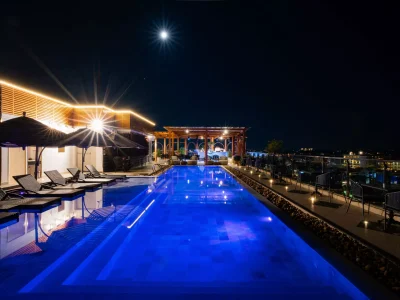
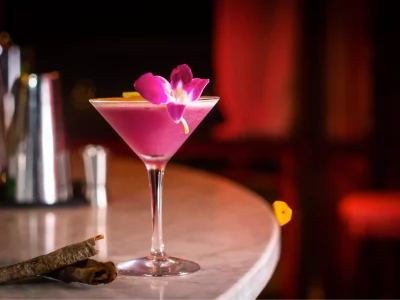
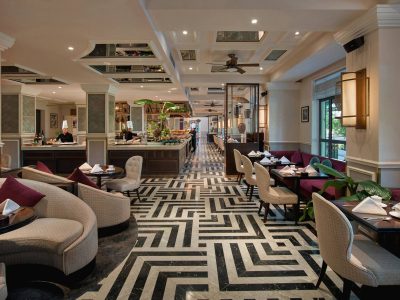
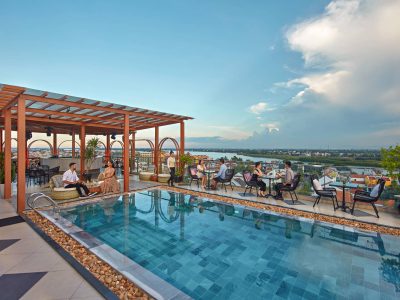
- Tet cuisine experiences at the hotel’s restaurants and bars such as Faifo Cafe, The Deck Bar, and The Attic Bar, where traditional Vietnamese flavors blend with international culinary highlights, evoking the warmth of a family Tet meal.
- Vietnamese cooking classes guided by professional chefs, allowing guests to prepare classic Tet dishes by hand and gain deeper insight into local culinary culture.
- Tet cultural activities such as learning to make lanterns, practicing early-year calligraphy, combined with relaxation at the spa and swimming pools, enjoying drinks at the rooftop bar while watching the sunset, or strolling through the Hoi An old town.
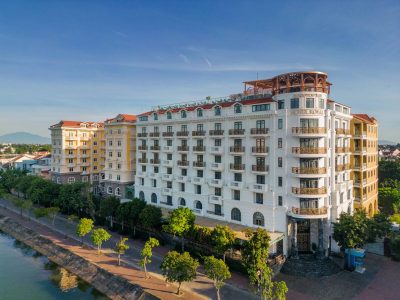
Located along the poetic Thu Bon River, the hotel features 187 elegantly designed guest rooms, offering a peaceful and comfortable stay during the early days of the new year. All of these elements come together to create a complete Tet holiday, where cuisine, cultural values, and the emotions of reunion intertwine harmoniously, making every spring moment in Hoi An deeply memorable.
Hopefully, through this article by Hotel Royal Hoi An Gallery, you have gained a clearer understanding of Traditional Vietnamese Tet meals of the three regions and the cultural values associated with the spirit of family reunion in Vietnam. Each dish and every way it is presented carries its own meaning, helping preserve family traditions and making the beginning of the new year warmer and more complete.